
Semrush Review is the industry standard for a reason, but for SEO professionals and agency owners, the real question is: does it still justify the investment in 2026?
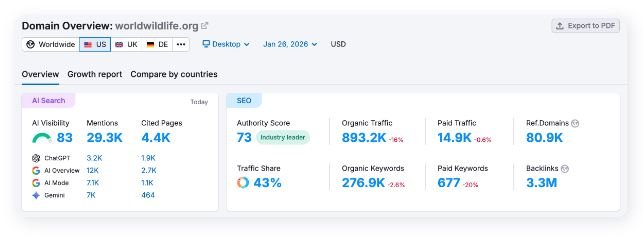
At ConexaLead, we treat Semrush as the central operating system of our SEO stack. By standardizing technical audits and benchmarking competitors through a unified data layer, we’ve seen agencies reduce manual discovery time by up to 60% while delivering more defensible arguments to clients.
Quick Note: If you’re ready to scale your agency’s results right now, you can grab a free trial and follow our exact workflow below.
Start Your Semrush Free Trial →
Who Is This Semrush Review For?
This article is tailored explicitly to:
- SEO professionals who manage multiple sites and campaigns.
- Agency owners who need to justify tool spend, scale reporting, and standardize SEO workflows.
It assumes you already understand ranking factors, SERP dynamics, and basic reporting cycles, and that your primary constraints are time, budget, and team capacity. If you’re a casual blogger or a one‑person operation touching SEO once a quarter, you’ll still find useful insights, but the examples and workflows are built for agencies that operate at scale.
Key themes for SEO professionals include:
- budget awareness (is this tool worth the recurring cost vs. point solutions?).
- ROI focus (how directly does it move traffic, rankings, or conversions?).
- team workflows (how well it integrates with writers, developers, and account managers?).
- white‑label and client‑facing needs (branding, reporting, and perception).
ConexaLead, for instance, uses Semrush as part of its “tool vetting” process before rolling a platform out to client accounts. This Semrush Review mirrors that approach: not as a sales pitch, but as a practical evaluation of whether Semrush fits the workflows of serious SEO teams.
What Semrush Actually Does (Agency‑Level Overview)
At the agency level, Semrush functions as an all‑in‑one SEO + AI‑visibility platform, not just a keyword research tool. It layers together several capabilities that, when combined, reduce the number of tools an agency needs to juggle:
- Keyword research & competitor gap analysis: discovering what terms teams are missing versus competitors.
- Technical SEO audits and site‑health monitoring: crawling sites to flag crawl errors, duplicate content, and structural issues.
- Backlink profiling and outreach support: mapping referring domains and identifying link opportunities.
- Rank tracking, content optimization, and reporting stacks: tracking position changes, optimizing pages, and generating dashboards.
Compared with “Google‑only” workflows (Google Search Console, Google Analytics, and manual spreadsheets), Semrush adds:
- competitor‑level benchmarking, not just your own performance.
- pre‑built rule sets and dashboards that reduce manual configuration.
- a single interface for discovery, diagnostics, and reporting—instead of stitching together multiple tools.
For SEO professionals, this makes Semrush less a “nice‑to‑have” and more a force‑multiplier for agencies that want to standardize their SEO stack across multiple clients
Deep Dive: Semrush Features That Matter to SEO Agencies
4.1 Keyword and Competitor Research
Semrush’s keyword research suite is built around three modules that matter most to agencies:
- Keyword Magic Tool: a broad‑coverage keyword generator that surfaces long‑tail phrases, related terms, and semantic clusters.
- Keyword Gap: a side‑by‑side comparison of keyword profiles between a client and up to four competitors, highlighting underserved terms.
- Competitive Positioning Map: a visual matrix that plots difficulty vs. opportunity to prioritize which terms are worth pursuing.
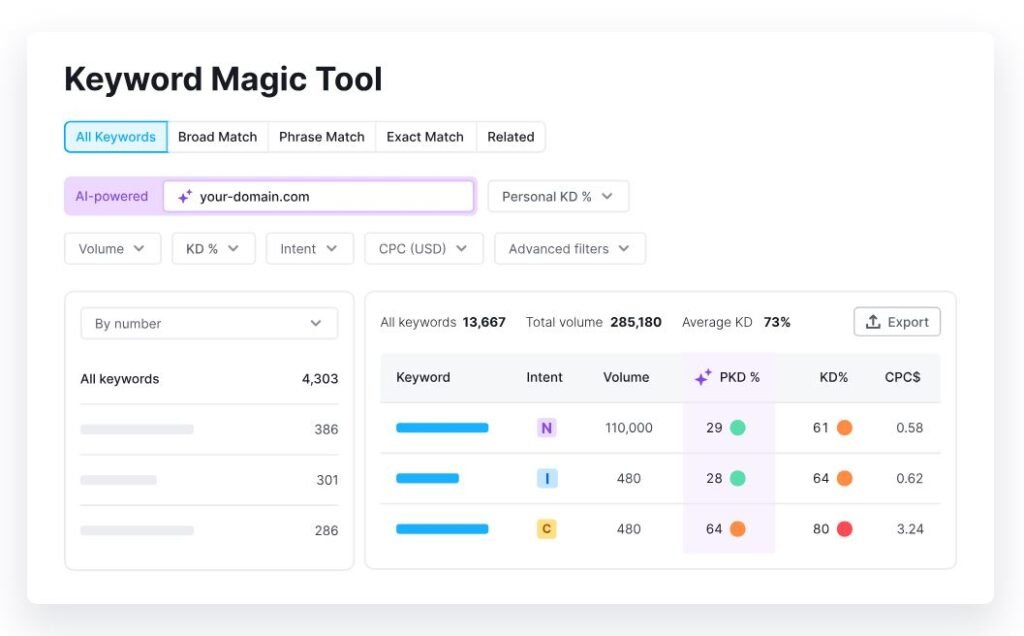
For SEO professionals, the power lies in embedding these into repeatable workflows, not running them once per project. For example, a typical agency cycle might:
- Use Keyword Gap to compare a SaaS client against its top 3 competitors.
- Filter for “low‑difficulty, high‑opportunity” terms using the Competitive Positioning Map.
- Expand those clusters with Keyword Magic to build a content brief and publish roadmap.
This approach allowed ConexaLead to identify a 15 keyword gap in under 30 minutes for a B2B SaaS client, which then became the foundation for a content update that drove measurable traffic growth within three months.
Quick Note: Want to see these keyword clusters for your own clients? You can run a live search now to find low-difficulty opportunities.
4.2 Technical SEO and Site Audits
For agencies, technical SEO audits are where Semrush becomes a scalability engine. Instead of crawling each site manually or using separate tools for each step, Semrush’s Site Audit module centralizes discovery across multiple domains.
Key capabilities:
- Large‑scale crawls (up to 100,000 pages per project in higher‑tier plans).
- Crawl‑based diagnostics for thin content, duplicate pages, crawl errors, and structural issues.
- AI‑driven health checks that flag patterns (e.g., repeated canonical issues, inconsistent meta tags).
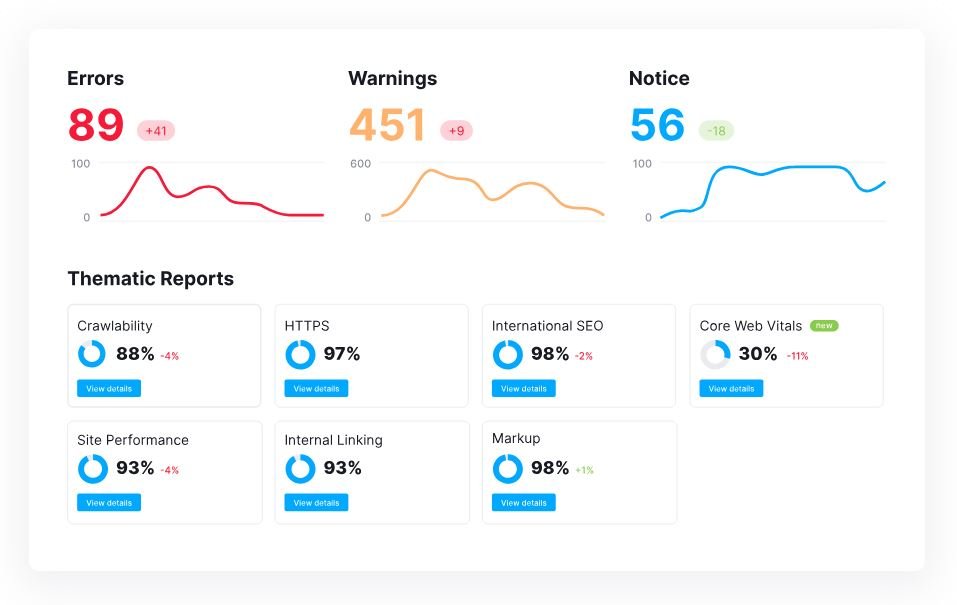
Agency‑level value comes from:
- Running comparable audits across all client sites with the same rules.
- Filtering for critical and high‑priority issues that impact crawlability or indexability.
- Exporting those issues into a tracking sheet for development teams.
In ConexaLead’s workflow, Site Audit is used in onboarding and quarterly check‑ups, ensuring that every client’s technical foundation is consistent and measurable.
Quick Note: To replicate the ConexaLead agency workflow, we recommend running a baseline audit to identify your clients’ critical errors in minutes.
Start Your Technical Audit Now →
4.3 Backlink and Authority Intelligence
Backlink profiles are one of the most defensible SEO levers—and one of the hardest to standardize. Semrush’s Backlink Analytics, Backlink Gap, and link‑monitoring dashboards help agencies structure this piece of the stack.
Core modules:
- Backlink Analytics: a full view of referring domains, anchor text profiles, and link‑growth trends.
- Backlink Gap: compares a client’s backlink profile with up to five competitors, surfacing missing opportunities.
- Link Monitoring: tracks new and lost links that can explain traffic shifts.
Agency‑friendly workflows include:
- Defining “healthy” vs. “toxic” link thresholds (e.g., domain authority, niche overlap, anchor text diversity).
- Applying those filters consistently across all client profiles.
- Using Backlink Gap to pinpoint guest‑post or partnership opportunities where competitors already have links but the client does not.
One practical tip: always export a list of high‑quality referring domains and segment them by vertical and domain authority before outreach. This turns link building from a scattershot campaign into a repeatable, data‑driven process.
4.4 Content Optimization & Creation
For agencies, weak or inconsistent content is often the biggest drag on SEO performance. Semrush’s content‑optimization suite—SEO Content Template, SEO Writing Assistant, and Content Analyzer—helps standardize quality at scale.
Key capabilities:
- SEO Content Template: generates a brief with semantic terms, headings, and structure based on top‑ranking pages for a target topic.
- SEO Writing Assistant: scores content in real time for readability, SEO signals, and originality.
- Content Analyzer: audits existing pages and suggests on‑page improvements and internal‑link opportunities.
SEO professionals use this by:
- Making SEO Content Templates the baseline for every piece of content.
- Requiring minimum SEO Writing Assistant scores before publishing.
- Running periodic Content Analyzer audits to identify under‑performing or redundant pages.
This reduces the number of revision cycles and aligns writers, editors, and SEO analysts around the same scoring system. ConexaLead has found that this workflow shortens turnaround time and improves the probability that content performs immediately after publication.
4.5 Reporting, White‑Labeling, and Client Communication
For agency owners, how data is presented often matters as much as the data itself. Semrush’s Agency Growth Kit and reporting modules directly address this by enabling branded, automated reporting that feels like an extension of the agency’s own product.
Key advantages:
- Automated reports for rankings, traffic, backlinks, and technical health without manual exports.
- White‑label dashboards that can be branded with an agency’s logo and colors.
- Pre‑built templates highlighting the metrics that clients actually care about (traffic, keyword gains, and health scores).
Agency‑level best practice is to:
- Define a standard reporting cadence (e.g., monthly dashboards, quarterly deep dives).
- Automate data pulls so analysts spend less time on screenshots and spreadsheets.
- Use dashboards as a centerpiece of client meetings, focusing on insights rather than raw data.
This positions Semrush as a must‑have for any agency owner who charges premium SEO fees and wants to reinforce the perception of professionalism and consistency.
4.6 AI‑Visibility Tools (Semrush One / AI Visibility Toolkit)
As search shifts toward AI‑driven surfaces—AI Overviews, ChatGPT, Gemini, and other assistants—agencies can no longer rely only on traditional SERP performance. Semrush’s AI Visibility Toolkit (integrated into Semrush One) tracks presence in these new environments.
Core capabilities:
- AI Visibility tracking: estimates how often a domain appears in AI‑driven responses across major platforms.
- Lens‑specific reporting: breakdowns for AI Overviews, ChatGPT, Gemini, and other assistants.
- Competitive AI‑visibility dashboards: comparisons showing how a client’s AI presence stacks up against competitors.
Agency‑level workflows include:
- Monitoring AI‑visibility trends over time to spot emerging shifts.
- Identifying which topics or entities are increasingly being surfaced in AI answers.
- Adjusting content strategy and authority signals to align with those patterns.
This is especially critical for high‑intent or transactional industries, where AI‑generated answers can influence conversions and brand perception.
| Feature area | SEO Toolkit (Standalone) | Semrush One (AI Visibility) |
|---|---|---|
| Keyword research | Full coverage | Full coverage |
| Site Audit | Included | Included |
| Backlink Analytics | Included | Included |
| Rank tracking | Extensive | Extensive |
| AI Visibility tracking | Not included | Core feature (AI Overviews, ChatGPT, Gemini) |
| Agency white‑label reports | Limited | Expanded, AI‑aware dashboards |
Forward‑looking agencies that incorporate AI‑visibility see Semrush One as a differentiator, not just an upsell.
Pricing, Plans, and Value for SEO Professionals
Semrush currently offers four main tiers that matter to SEO professionals and agencies: Pro, Guru, Business, and Semrush One. Each tier scales differently in terms of projects, data depth, and AI‑visibility features.
Pricing on Semrush’s platform is updated frequently, so exact monthly amounts can change over time. Instead of hard‑coding numbers that may become outdated, we recommend you check the live pricing page directly, where you’ll also see current discounts and annual savings (up to 17% when billed annually).
| Plan | Projects/sites monitored | Rank‑tracking keywords | Backlink data depth | API limits | White‑label reporting |
|---|---|---|---|---|---|
| Pro | Up to 5 sites | 10,000 keywords | Limited | Basic | Minimal |
| Guru | Up to 15 sites | 40,000 keywords | Deeper | Improved | Basic |
| Business | Up to 40 sites | 80,000 keywords | Full | High | Available |
| Semrush One | 10+ sites (API‑driven portfolios) | ~160,000 keywords | Full | Very high | Advanced + AI dashboards |
Quick Note: For most growing SEO agencies, the Guru Plan is the “sweet spot.” It’s the entry-level tier that unlocks historical data and Google Looker Studio integration both essential for professional client reporting
Check Live Pricing & Discounts →
Semrush Pros and Cons from an Agency Perspective
For SEO professionals and agency owners, the main advantages of Semrush are:
Pros:
- Depth of data across keywords, competitors, backlinks, and technical diagnostics.
- Strong automation and reporting features that reduce manual work.
- AI‑visibility capabilities that position agencies ahead of market shifts.
- Scalability for multi‑site, multi‑client portfolios.
Cons:
- Pricing can be steep for small teams or solo practitioners.
- The learning curve is significant; agencies must invest time in training.
- Feature overload can confuse new users if not guided by a clear workflow.
A quick note: Semrush can be overkill for:
- Solopreneurs running 1–2 sites who don’t need large‑scale audits or white‑label reporting.
- Non‑technical marketers who won’t internalize the platform’s full workflow.
For those users, cheaper or more focused tools may be a better fit.
Semrush vs Alternatives (Agency‑Friendly Snippet)
Semrush is often compared to Ahrefs, SE Ranking, and crawlers like Screaming Frog. At the agency level, the key differentiators are:
- All‑in‑one vs. best‑in‑class: Semrush integrates keyword research, technical audits, backlinks, and reporting in a single platform; competitors often excel in one area but require more tool stitching.
- Reporting and scalability: Semrush’s Agency Growth Kit and white‑label dashboards make it easier to scale reporting across clients than piecing together multiple tools.
- AI‑visibility depth: Semrush One is currently ahead in tracking AI‑driven search surfaces, which is a growing differentiator for forward‑looking agencies.
For SEO professionals who want to minimize tool sprawl and maximize reporting polish, Semrush represents a strong default choice.
How ConexaLead Uses Semrush (Case‑Style Section)
At ConexaLead, Semrush is woven into the core SEO workflow instead of being a one‑off reporting add‑on. Concrete use cases include:
- Onboarding audits: using Site Audit and Backlink Analytics to baseline technical health and link profiles for new clients.
- Monthly rank tracking and dashboards: automating position and traffic reports for each client, with white‑label dashboards shared in review meetings.
- Content planning and performance analysis: using Keyword Gap and Content Analyzer to identify under‑optimized pages and prioritize updates.
This lets ConexaLead move faster in client onboarding, reduce report‑generation time, and build a more defensible SEO strategy for every account. If you’re looking for SEO‑tool‑backed strategies tailored to your portfolio, visit conexalead to see how Semrush is integrated into a full‑service SEO workflow.
Who Should (and Should Not) Buy Semrush?
SEMush makes the most sense for:
- SEO professionals managing multiple domains or campaigns.
- Agency owners who need scalable audits, reporting, and link‑building workflows.
- Teams that value AI‑visibility and want to stay ahead of search‑surface changes.
SEMush is likely overkill for:
- Solo practitioners with 1–2 sites and limited budgets.
- Non‑technical marketers who won’t invest in training or structured workflows.
Budget, team size, and project volume should guide the decision.
Final Verdict – Semrush for SEO Professionals and Agencies
For serious SEO teams and agencies in 2026, Semrush is worth it—provided it’s treated as a centralized SEO operating system, not a single‑purpose keyword tool. Its depth of data, automation, reporting capabilities, and AI‑visibility features make it a strong foundation for scaling SEO across multiple clients.
This practitioner‑focused Semrush Review positions the platform as a practical, ROI‑driven stack for SEO professionals and agency owners who want to standardize workflows, shorten feedback loops, and future‑proof their SEO strategy.